Coral Reef vs. Cold-Water Coral: How UK Deep-Sea Reefs Differ from Tropical Ones
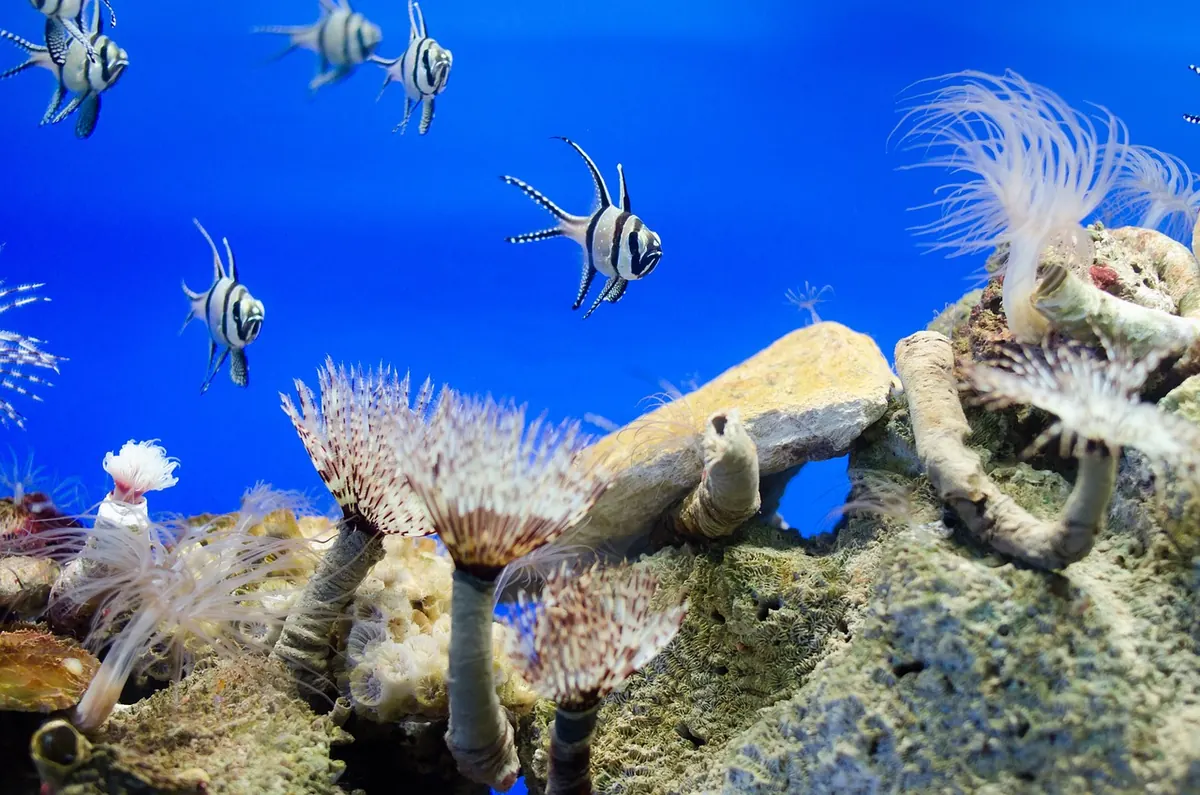
Picture a coral reef and most of us see the same thing: sunlight through turquoise water, a shoal of bright fish, coral in shades of yellow and purple. Now picture a reef 200 metres down in the Atlantic west of Scotland, in water cold enough to numb your hands, where the only light comes from the lamp of a remotely operated vehicle. Both are coral reefs. Almost nothing else about them is the same.
The UK has its own coral reefs, built by different species, growing at a different speed and facing a different set of pressures. Those differences are not a technicality — they shape what conservation can realistically achieve.
Temperature, light and the business of surviving
Tropical reef-building corals live in shallow, sunlit water, generally in the top 30 metres or so, where temperatures sit roughly between 23°C and 29°C. They manage this because of zooxanthellae: single-celled algae living inside their tissue that photosynthesise and hand back most of the energy the coral needs. Sunlight is the engine of a tropical reef.
Cold-water corals have no such partnership. There is no light to work with, so they feed the old-fashioned way, catching plankton and organic particles from currents that pass over their polyps. The main reef-builder in UK waters is Lophelia pertusa, now more correctly called Desmophyllum pertusum, often joined by Madrepora oculata. They tolerate roughly 4°C to 12°C and appear from a few sheltered Scottish sea lochs, where they sit surprisingly shallow, down to banks and seamounts well over 1,000 metres deep.
That single difference — farmer versus hunter — explains most of what follows. A tropical coral has its food supply built in and can afford to sit still in bright water. A cold-water coral is entirely dependent on what the current delivers, which is why its reefs tend to form exactly where currents speed up: on seamount flanks, in channels between banks, along the lip of the continental shelf, and on the slopes of cold-water coral mounds where plankton is concentrated and swept clean. They also need something to settle on, and water that is not yet corrosive to their aragonite skeletons — a chemical limit that sets a lower boundary on where reefs can exist.
Different architects, different tenants
A tropical reef is a crowd. Hundreds of coral species can share one reef slope, from fast-growing branching corals to boulder-like massive ones, with sponges, urchins, parrotfish and reef sharks filling every gap.
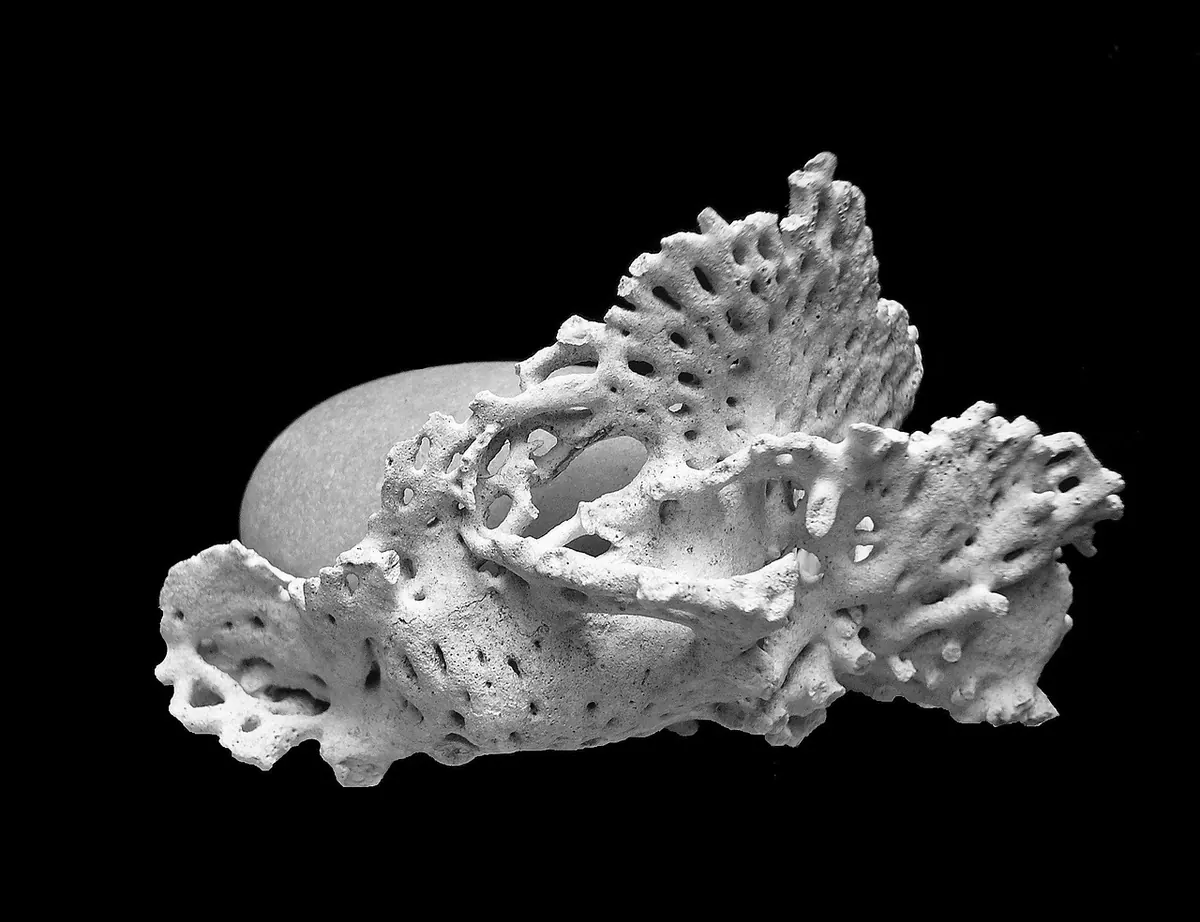
UK deep-sea reefs are built by a much smaller cast. Thickets of Desmophyllum form a tangle of branches that traps sediment and slowly accumulates into mounds; Madrepora adds a second layer of framework. What that structure supports is the point: sponges, sea fans, brittlestars, squat lobsters, sea pens, and fish such as redfish, ling, tusk and grenadiers.
The ecology works differently, too. A tropical reef is a centre of biodiversity — a few hectares can hold thousands of species, and the competition for space is ferocious. A cold-water reef is more of an oasis: fewer species, but often a startling concentration of life in an otherwise flat, muddy expanse of deep sea. The coral framework gives fish somewhere to shelter, invertebrates somewhere to attach, and juveniles somewhere to hide. Several commercially important species, including redfish and ling, use deep-water coral habitat as nursery ground. Remove the coral and you do not simply lose the coral; you lose the architecture that everything else was using.
Slow builders, long memories
Here the two reefs diverge most sharply. A branching tropical coral can extend 10 centimetres or more in a year, and even a slow, boulder-shaped species manages about a centimetre. Desmophyllum pertusum grows at roughly a few millimetres to a couple of centimetres a year — an order of magnitude slower, in the dark, in water close to 6°C.
Multiply that out and you get timescales that are hard to hold in your head. The great cold-water coral mounds of the North Atlantic have been accumulating for thousands of years, layer upon layer of dead framework, trapped sediment and living branches. The Darwin Mounds, discovered in 1998 at around 1,000 metres west of Shetland, were already ancient when they were first seen by a camera. Individual colonies can live for centuries; some deep-water coral reefs have been radiocarbon dated to more than 8,000 years old. They are, in effect, archives — their skeletons record changes in ocean chemistry and current strength going back far beyond any instrumental record.
That longevity has a flip side. The same slow growth means the damage is just as durable as the structure.
Reproduction, recovery and the cost of damage
Tropical corals mostly reproduce in synchronised mass spawning events, triggered by temperature and the lunar cycle, releasing eggs and sperm into the water in a single coordinated night. Larvae disperse widely, and a damaged patch can sometimes be recolonised within years if surrounding reefs are healthy.
Cold-water corals spawn too, but their larvae are fewer, their dispersal is patchier, and suitable hard substrate in the deep sea is scarce. Settlement is a rare event, and a settled polyp then needs decades to become a colony and centuries to become a reef. Recovery is measured not in years but in human lifetimes.
Scrape a tropical reef and it may heal in a decade. Scrape a deep-water reef and you are looking at a scar that will outlast everyone who made it.
A single pass of a bottom trawl over a coral mound can do all of that at once: snap the framework, kill the polyps, flatten the structure that sheltering fish depended on, and leave behind rubble that smothers whatever survived.
Different pressures, different seasons
The threats are as unalike as the reefs. Tropical reefs are on the front line of ocean warming, and mass bleaching events are now frequent enough to be routine. Add ocean acidification, increasingly violent storms, coastal pollution, sedimentation from land clearing, invasive species and overfishing, and the list is long and mostly driven from above.
UK deep-sea reefs face a different set:
- Bottom trawling — historically the single greatest cause of damage to cold-water coral in UK waters, and still the pressure that conservation measures are largely designed around.
- Oil, gas and renewable infrastructure — pipelines, cables, anchors and drilling disturbance on exactly the depths where reefs form.
- Ocean acidification — often worse at depth, because cold water holds more dissolved carbon dioxide and aragonite saturation is already lower there. Warming pushes that corrosive boundary shallower, shrinking the habitable zone from below.
- Sediment and pollution — including the slow drift of contaminants into deep basins where they accumulate.
Notice what is missing: sunlight. Deep reefs do not bleach. Their defining threat has been physical destruction, which makes the fix, in principle, more straightforward — and more urgent.
Studying a reef you cannot see
Surveying these reefs is a technical and expensive business. Multibeam sonar maps the shape of the seabed from a ship; remotely operated and autonomous vehicles fly cameras and collect samples; box corers and grabs take sediment; environmental DNA can now tell researchers which species are present from a jar of water. Long-term monitoring sites, revisited year after year, are rare and precious, because only repeated visits can show whether a reef is recovering or still declining.
Even so, only about a quarter of the global seafloor has been mapped at modern high resolution, and much of what we know about UK cold-water coral comes from a relatively small number of surveyed sites. A diver can see a tropical reef in a single morning. A deep reef survey takes a ship, a crew, thousands of pounds a day and a great deal of patience — which is part of why these reefs stayed hidden for so long, and why they are so easy to forget.
Why the difference matters for conservation
Because recovery times differ by orders of magnitude, the strategies must differ too. For tropical reefs, there is a growing emphasis on active intervention: coral nurseries, transplantation, selective breeding for heat tolerance, alongside the essential work of cutting emissions and reducing local pressures.
For UK deep-sea reefs, active restoration is barely feasible — you cannot economically replant a structure that took eight millennia to build. The realistic goal is protection: keeping damaging gear away from living reef, which is exactly what happened at the Darwin Mounds, closed by emergency measure in 2003 and made permanent in 2004, and now part of a UK network of several hundred marine protected areas. Similar logic underpins the OSPAR network across the North-East Atlantic.
That means closures, gear restrictions, buffer zones around known reef, and careful assessment before any new pipeline, cable or dredge is permitted. It means accepting that a reef left alone will gradually recover and a reef trawled twice will not. And it means telling the story loudly enough that people care about a place they will never see.
Both are coral reefs. One is powered by sunlight and threatened by heat; the other lives in the dark and has been threatened mainly by us. The first is famous, photographed and mourned in real time. The second is largely invisible — and, for that reason, needs the more deliberate kind of protection.
Photo: loilamtan / Pixabay