Eco Travel Checklist: Packing for a Low-Impact Dive or Snorkel Holiday
A dive holiday can be the best fortnight of your year and, packed carelessly, one of the worst things to happen to the reef you went to see. The wrong sunscreen, a suitcase of single-use plastic and a hold full of brand-new kit all leave a mark. The fixes are cheap, light and mostly already sitting in your kitchen cupboard.
What follows is a working checklist for a two-week dive or snorkel trip. Adjust the quantities, keep the principles.
Sun protection that doesn't wash off onto coral
Sunscreen is the single biggest compromise most of us make. Filters such as oxybenzone and octinoxate are linked to coral bleaching and are restricted in some marine parks and destinations, so read the ingredient list rather than the label. The words "reef-safe" are not regulated anywhere, which means a bottle can carry the phrase and still contain ingredients you would rather keep out of the water.
Look for mineral formulas built on non-nano zinc oxide or titanium dioxide. Non-nano matters: the particles are too large to be taken up easily by small marine organisms. A cream or lotion beats a spray, which drifts on the breeze and coats the sand. Apply it at least twenty minutes before you get in, so it soaks in rather than rinsing straight off.
Better still, cover up. A long-sleeved rash vest, board shorts and a wide-brimmed hat cut the amount of lotion you need to a fraction, and they work in the water as well as out of it. Solid sunscreen in a tin avoids the liquid allowance at security and the plastic bottle at the end of the trip.
The reusable kit that earns its place
Dive boats and island shops are often a long way from a recycling bin, and much of what gets handed out ends up in landfill or, worse, over the side. These items weigh very little and replace a fortnight's worth of disposables:
- A refillable water bottle, plus purification tablets or a filter bottle for places where you cannot trust the tap
- Solid shampoo and conditioner bars, and a bar of soap — no liquids, no plastic
- A bamboo toothbrush and toothpaste tablets
- A cloth tote for shopping and a dry bag for the boat
- A small mesh bag for litter you find on dives or beaches
- Reusable cutlery and a folding cup if you like a morning brew
- Reusable menstrual products, which also save space in a dive bag
Pack a spare mesh bag for wet kit so it can drain rather than sit in a plastic sack for a week.
Buy the small things, rent the big ones
A mask is the one piece of kit worth buying. Fit is personal, and a leaky rental mask ruins a trip. Take your time over it, and add a snorkel you are happy to keep for years.
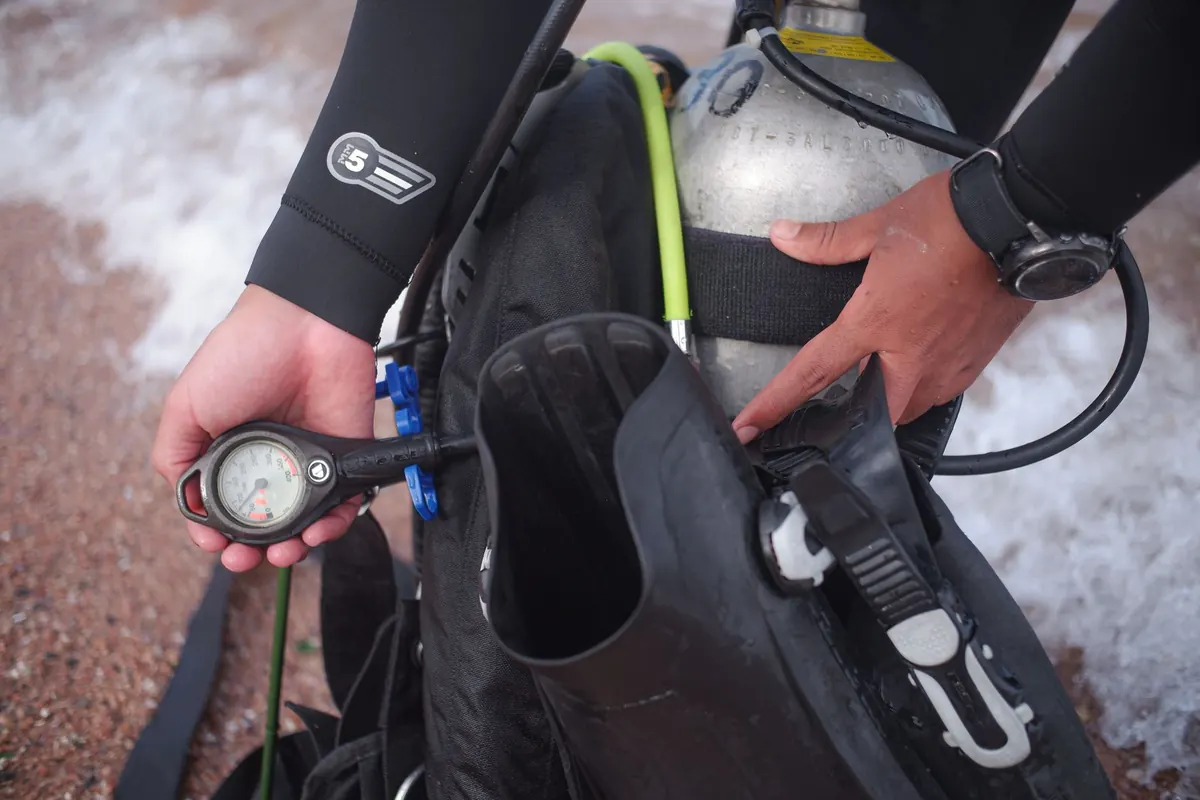
For everything else, renting locally is usually the lower-impact choice. It avoids the air freight of a heavy bag, supports the local economy and saves you from buying a wetsuit you use twice. If you dive often enough to justify your own regulator and computer, buy well and service them, and ask your dive centre what their own rental kit is like before assuming it will be poor. If a wetsuit is on your list, look at neoprene-free options and, more importantly, choose one that will last a decade rather than a season. Travel fins are worth the space if you snorkel more than you dive.
Documents and paperwork
Certification cards, a logbook and proof of insurance are the three things that can stop a dive before it starts. Photograph your cards and keep the images offline as well as on your phone, and carry paper copies somewhere separate from your passport.
Dive-specific accident insurance is not the same as ordinary travel cover, and standard policies often exclude diving below a set depth. Check the small print, and speak to your insurer directly if you are unsure what you are covered for. If you have a medical condition that affects diving, take professional advice before you travel rather than at the check-in desk.
Some marine parks charge an entry or conservation fee, occasionally with a wristband you must wear on the boat. Budget for it, pay it locally where you can, and check current entry requirements and passport rules for your destination through official government travel advice rather than a forum post.
Choosing how you get there and where you stay
Flights usually dominate the carbon cost of a dive trip, so the most effective decision is often made before you pack. One longer trip beats three short ones. Take the train or bus where it is practical, fly direct if you can, and pack light — every kilogram adds fuel.
Where you sleep and who takes you out matter too. Small, locally owned guesthouses keep money in the community and are often more willing to refill a water bottle than a large resort. When you choose a dive operator, ask a few questions before booking:
- Do you use mooring buoys rather than dropping anchor on reef?
- How many divers per guide, and do you brief on no-touch, no-feeding and buoyancy?
- Do you provide drinking water refills on the boat?
- Do you support any local conservation or clean-up work?
Carbon offsets are worth buying if the alternative is buying nothing, but they are not a licence to fly more. Treat them as a small tidy-up, not a solution. Good buoyancy is the other half of the story: a diver who stays off the bottom and keeps hands tucked in does more for a reef than any purchase.
The night-before check
Before you zip the bag, run through this: reef-safe sunscreen and a rash vest packed, water bottle empty and in the hand luggage, solid toiletries in the wash bag, certification and insurance copies in two places, and space left for the litter bag. Then set yourself one rule for the trip — hands off the reef, fins off the coral, and nothing over the side but bubbles.
Nobody packs perfectly. Getting the sunscreen, the bottle and the boat right covers most of it.
Photo: Hossam Ashoor / Pexels