Volunteer vs. Pay-to-Conserve: Comparing Marine Conservation Trips for UK Travellers

Book a marine conservation trip and you'll be offered two very different things under one warm, blue-sounding promise. One asks for your time and treats you as crew. The other asks for your money and treats you as a participant. Both can do genuine good. Both can also quietly take you for a ride.
The difference is rarely obvious from a glossy website. It comes down to who pays whom, what you'll actually be doing at six in the morning, and whether the data you collect ends up somewhere useful. Here's how to tell the two models apart before you hand over a deposit.
Two models, often confused
Volunteer placements usually mean a research station, university or conservation charity needs extra hands. Spaces are limited, competition is real, and the organisation may cover your accommodation and food in exchange for a set number of weeks of work. You normally fund your own flights, insurance and personal kit.
Pay-to-conserve trips — sometimes sold as conservation travel, citizen science expeditions or voluntourism — work the other way round. You pay a fee that covers your place, training, lodging and meals, and a slice usually goes to the project. There's nothing wrong with that in principle. Well-run projects need income, and paying participants can fund work that grants never quite stretch to.
The confusion starts when a commercial trip markets itself as volunteering. If you're paying a company for the privilege, you're a paying participant, not a volunteer. That's fine — just know which one you've booked, because it changes what you should expect and what you're entitled to ask.
What the fee is really buying
Costs vary widely with destination, trip length and how remote the site is, so comparing headline prices rarely helps. Compare what sits inside them instead.
- Training and supervision. Who teaches you, and how many participants share one supervisor?
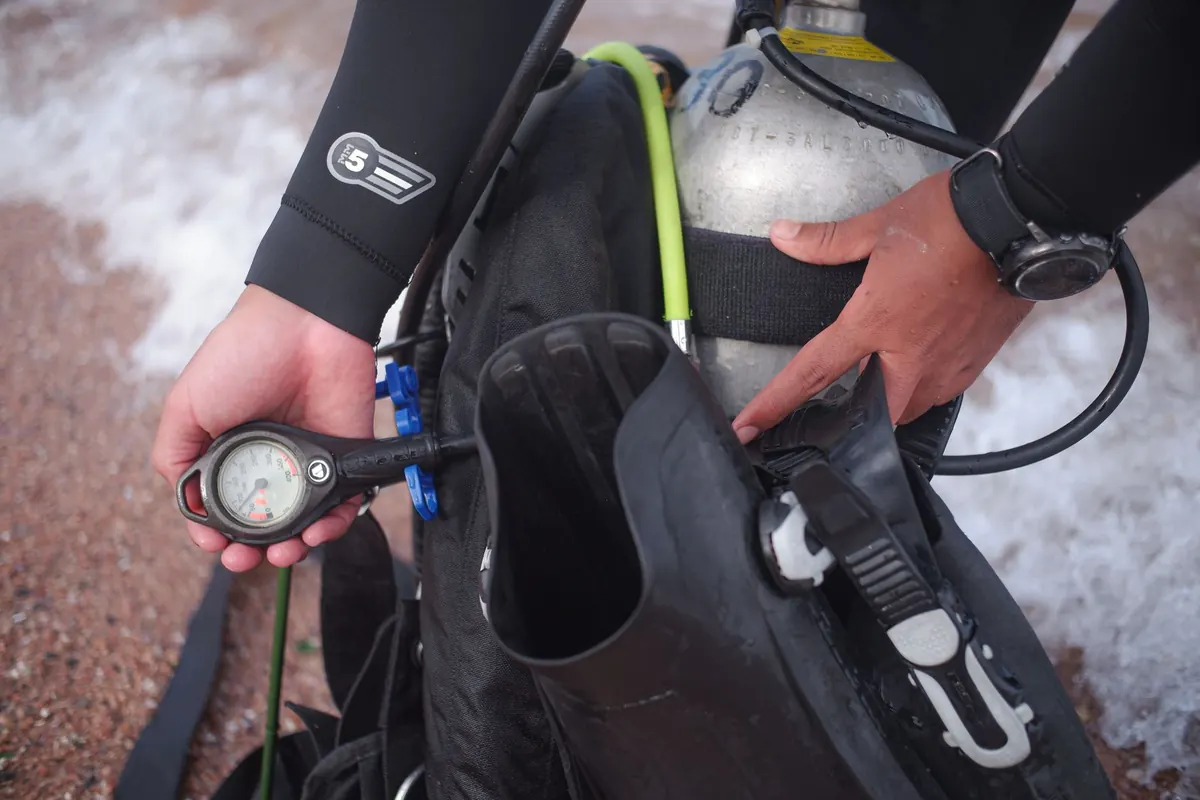
- Gear and boats. Are tanks, weights, wetsuits and fuel included, or hired locally at extra cost?
- Food and lodging. A shared bunkhouse and rice-and-beans dinners are not the same product as a dive resort.
- The donation element. Ask what proportion reaches the project, and whether it's a fixed amount or a vague promise.
- Hidden extras. Flights, visas, travel and dive insurance, medicals, kit hire, tips and airport transfers add up fast.
A modest fee with heavy extras can beat a glossy all-inclusive price, or lose badly to it. Total everything before you decide.
Skills you'll gain — and the ones you won't
Real conservation work builds skills that travel well: underwater survey methods such as belt transects and quadrats, species identification, data recording, GPS work, photo tagging, and the patience to repeat a task until the numbers are trustworthy. You'll also learn how a field station runs — rotas, briefings, equipment logs, the unglamorous admin that makes research possible.
What a two-week trip won't give you is the right to call yourself a marine biologist. Be sceptical of qualifications that only exist inside one operator. If a trip offers a dive speciality, ask whether it's recognised by other training agencies and whether the logged hours are real. And ask who keeps the training records: if you're taught to identify fish on site, those records should stay with the project, not walk out of the door with you.
Ethical impact: where the money and the data go
Two questions separate the serious from the superficial. First, where does your fee go? A charity should be able to show you its accounts and explain roughly how much reaches the field. A company should be able to name the project it supports and how the relationship works.
Second, what happens to the data? Reef surveys are only worth the effort if someone uses them — a management plan, a government report, a long-term monitoring dataset. If the answer is vague, the work may be busywork designed to keep participants occupied and photographs coming.
Then there's the human side. Ask whether local people are employed, trained and paid, including in the roles volunteers fill. A project that replaces paid local work with free visitor labour isn't conserving much. Watch too for activities that disturb wildlife: touching or feeding animals, chumming to bring sharks close, or posing with turtles for pictures. Good projects keep their distance and say so in writing.
Questions to ask before you book
- Who runs the project — a charity, a company or a research institution?
- What does an average day look like, hour by hour, and how much is fieldwork rather than cooking and cleaning?
- What training will I receive, from whom, and how many people share each supervisor?
- What qualifications do I need: dive certification level, medical, swimming ability, first aid?
- How is the diving run — licensed boats, safety protocols, evacuation plans, radio cover?
- Where does the data go, and can you show an example of how previous data was used?
- How many local staff do you employ, and are they involved in decisions?
- What exactly does the fee cover, and what will I pay for on top?
- Can I speak to someone who took part last season?
Before you pay a deposit
Write down what you actually want. If it's a holiday with a purpose and a week of reef time, a well-run pay-to-conserve trip may be exactly right. If you're building towards a career, look for placements that recruit for skills, run for longer, and can name the research your data feeds into.
Then handle the dull parts: check that your travel insurance covers the diving you'll really be doing, arrange a dive medical if you need one, and confirm visa and vaccination requirements. For insurance, visas and medical matters, speak to a qualified professional rather than trusting a forum thread.
One last test. Ask what happens if you don't come. A project that collapses without paying visitors may be a tourism business with a marine theme. A project with funded research, employed local staff and a waiting list of trained volunteers is the real thing — and worth the deposit.
Photo: criss_chengck10339 / Pixabay